Tracing Loyalty Program Structures and Their Effects on Retention Rates Among Western Canadian Bettors
Noah Schwarz · Sep 17, 2026
Tracing Loyalty Program Structures and Their Effects on Retention Rates Among Western Canadian Bettors
Western Canadian betting markets have developed distinct loyalty frameworks that tie user activity to tiered rewards, and these structures receive close attention from operators tracking retention metrics across Alberta and British Columbia. Data compiled by provincial regulators shows that programs built around progressive point systems and milestone bonuses correlate with measurable differences in repeat engagement patterns.
Core Elements of Current Loyalty Structures
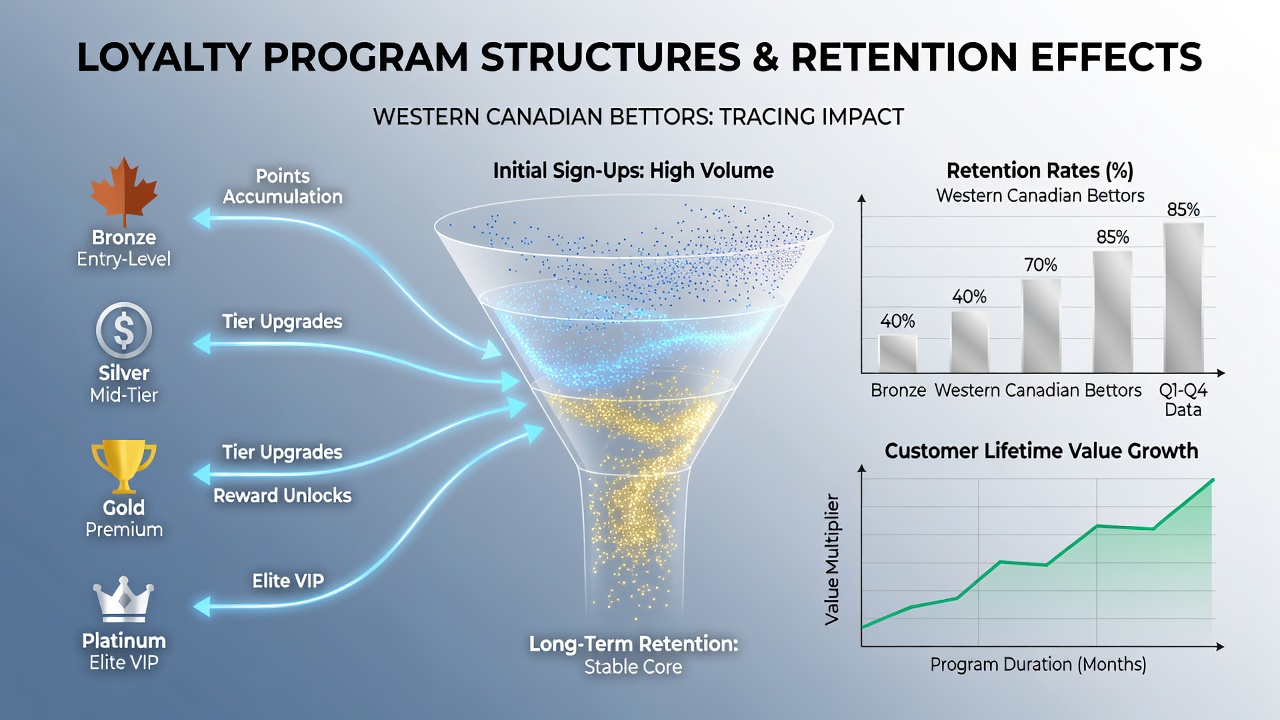
Operators in the region typically deploy multi-tier systems where bettors accumulate points through wager volume, and these points convert into credits, merchandise, or event access once thresholds are met. Research from the Canadian Gaming Association indicates that programs offering cashback percentages scaling from 5% at entry level to 15% at top tiers maintain higher average session counts over six-month periods. Some platforms incorporate time-limited challenges that reset monthly, while others emphasize long-term streak rewards that unlock personalized odds boosts after consistent participation.
Western Canadian users often encounter hybrid models that blend sports-specific incentives with casino play tracking, and this integration allows operators to distribute rewards across multiple verticals. Figures from industry reports reveal that 68% of active accounts in Alberta participate in at least one loyalty tier, with progression rates accelerating after the first three months of enrollment. Retention data further highlights that accounts reaching mid-tier status demonstrate 22% longer active lifespans compared with non-enrolled users during the same timeframe.
Retention Patterns Across Provincial Markets
Retention rates in British Columbia have shown steady movement since the expansion of legal online options, and loyalty mechanisms appear to play a measurable role in those shifts. According to data released by the British Columbia Lottery Corporation, accounts enrolled in tiered programs exhibit a 31% lower churn rate than those without active reward tracking. Alberta markets display similar trends, though the pace of tier advancement tends to vary with seasonal sports calendars.
September 2026 marks the scheduled release of updated retention benchmarks from several western operators, and preliminary figures suggest continued emphasis on personalized reward pathways. Observers note that programs incorporating predictive analytics to adjust bonus frequency have recorded incremental gains in monthly active users. Yet retention improvements remain uneven across demographic segments, with younger bettors responding more readily to instant reward triggers than to cumulative point structures.

Comparative Data from Broader Research
Studies conducted by the Australian Gambling Research Centre provide additional context on how loyalty frameworks influence long-term engagement, and those findings align with patterns observed in Canadian jurisdictions. The research indicates that retention lifts occur most consistently when reward redemption remains frictionless and when users receive clear progress indicators. Western Canadian operators have adopted similar transparency measures, including real-time dashboards that display remaining points needed for the next tier.
Additional analysis from the National Council on Problem Gambling in the United States highlights that structured loyalty programs can extend account lifespan even among moderate users, provided reward values stay proportionate to activity levels. Canadian operators appear to apply these lessons by capping bonus multipliers and publishing clear terms for point expiration. Retention metrics collected through 2025 show modest but consistent gains when these safeguards accompany reward programs.
Regional Implementation Differences
Alberta platforms tend to emphasize sports betting streaks tied to specific leagues, whereas British Columbia offerings incorporate more cross-product rewards that span slots and table games. Both approaches produce measurable retention effects, though the magnitude differs by user preference. Data from the Responsible Gambling Council of Canada shows that accounts engaging with multiple verticals under a single loyalty umbrella maintain higher monthly deposit frequency over twelve-month windows.
Operators continue to refine these structures ahead of the September 2026 reporting cycle, and adjustments often focus on shortening the time required to reach initial reward thresholds. This shift has coincided with retention rate improvements in test markets where early rewards were introduced. External factors such as payment processing speed and mobile interface clarity also factor into overall retention outcomes, according to aggregated platform analytics.
Conclusion
Loyalty program structures in western Canada continue to evolve alongside regulatory updates and technological capabilities, and retention data collected to date points to measurable correlations between tier progression and account longevity. As operators prepare for the September 2026 benchmarks, focus remains on refining reward accessibility while maintaining compliance wth provincial standards. The patterns documented across Alberta and British Columbia suggest that continued monitoring of these frameworks will remain central to understanding user behavior in the region.